Unless otherwise noted, videos are courtesy of YouTube.
* If you receive an error when viewing a video, please reload page. (known error with Shopify)
Eastman Kodak Brownie Line (1917-1961)
Eastman Kodak Brownie Line (1917-1961)
Kodak
Kodak Brownie No. 2C
The Eastman Kodak No. 2C Brownie, produced between 1917 and 1934, was a surprisingly large, entry-level box camera designed to make wide, high-detail snapshot photography accessible to everyday families. Unlike smaller handheld cameras in the famous Brownie lineup, the "2C" designation signaled its unique film size: it utilized Kodak’s proprietary 130 roll film, which produced unusually broad, postcard-style negatives measuring nearly 3 by 5 inches times 8 inches. Wrapped in imitation black leather over a sturdy card-and-metal frame, the camera operated with foolproof simplicity—featuring a basic rotary shutter with a simple single lever, a fixed-focus lens, and two small top-mounted mirror viewfinders so photographers could frame photos horizontally or vertically at waist level. Originally selling for under $5, the No. 2C brought sprawling family portraits and sweeping landscape photos to the masses, though its gigantic 130 film format was eventually phased out by the mid-20th century as smaller, more compact roll films took over.
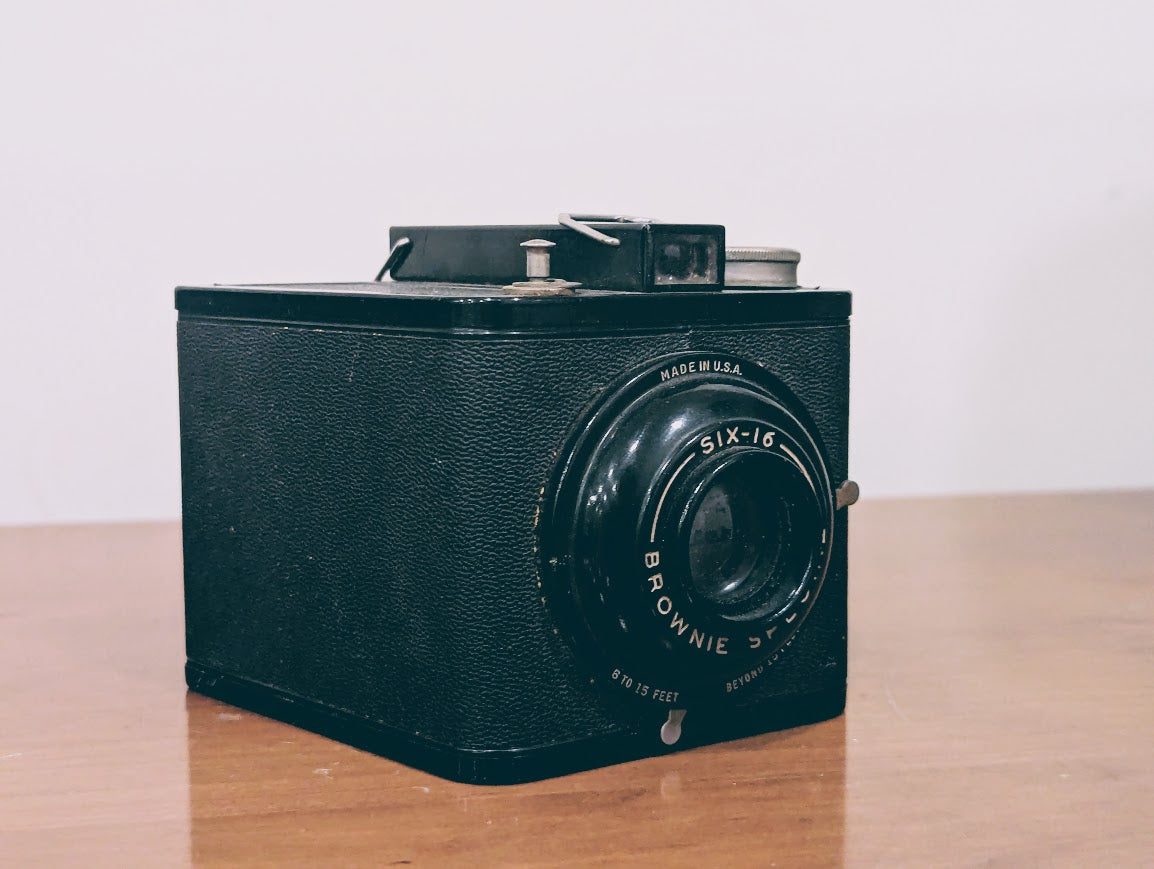
Brownie Special SIX-16
The Brownie Special Six-16, produced by Kodak between 1938 and 1942, was a stylish, art deco box camera designed by the legendary industrial designer Walter Dorwin Teague. It featured a unique, rounded black metal body and a wide viewfinder, and it was built to take large, expansive film negatives. Unlike simpler box cameras of the era, the Special featured a quick-switch dial on the front, letting users choose between close-up portraits or distant landscape shots for sharper pictures. Because its specific film size was discontinued decades ago, it stands today as a prized, beautiful shelf piece for vintage camera collectors.
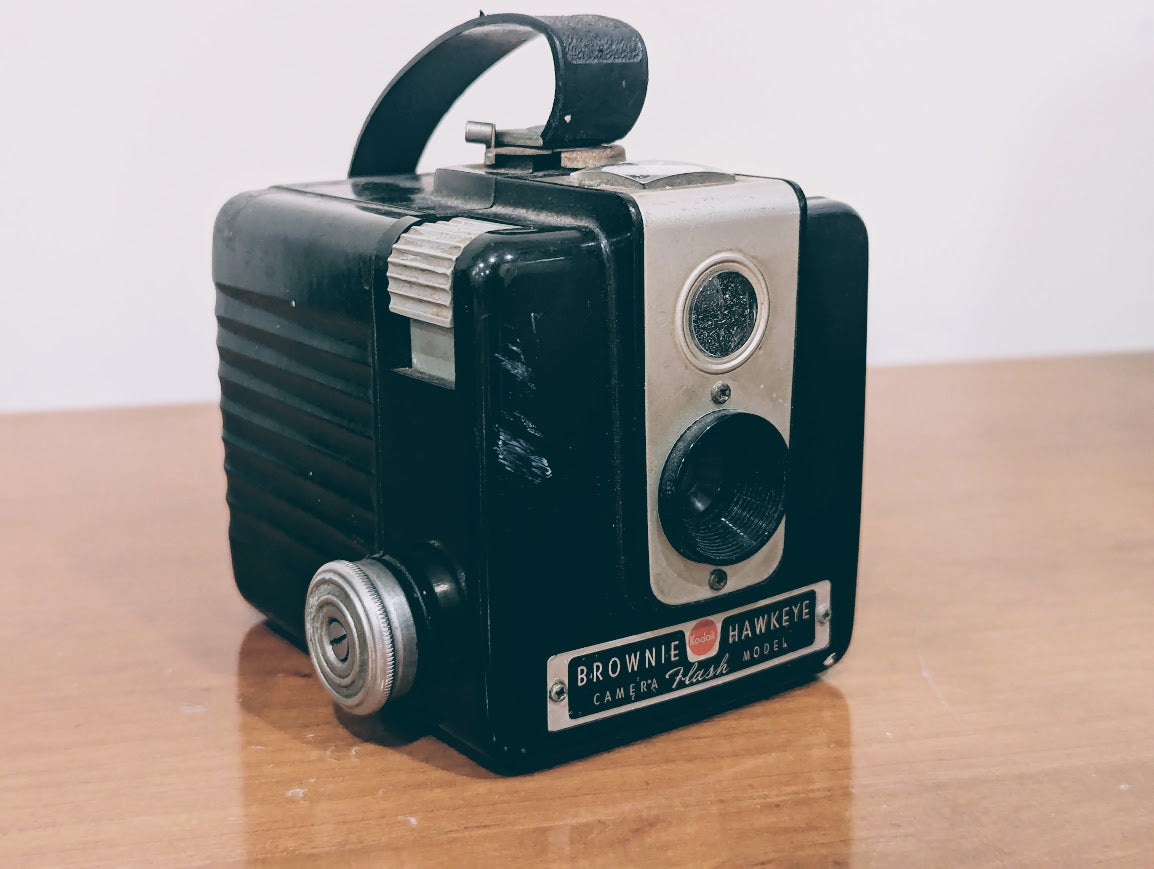
Brownie Hawkeye
The Brownie Hawkeye, introduced in 1949 and produced until 1961, remains one of Kodak’s most successful and recognizable family cameras of the post-war era. Designed with a distinctively upright, molded plastic body and a massive, oversized viewfinder on top, the camera was built for ultimate simplicity. In 1950, Kodak added a flash plug to the side for the iconic, large "Kodalite" flashgun, making it an absolute favorite for indoor birthday parties and holiday gatherings. It was incredibly durable and easy to use, making it an enduring pop-culture icon of 1950s Americana.
Source: Estate Sale, Wilton, CT