Unless otherwise noted, videos are courtesy of YouTube.
* If you receive an error when viewing a video, please reload page. (known error with Shopify)
Mel Blanc Exhibit (1948-1960)
Mel Blanc Exhibit (1948-1960)
PILOT & SONY
Mel Blanc
Mel Blanc, also known as "The Man of 1000 Voices", was a famous voice actor of the 1940s through the 1980's. He was known for doing almost all the voices on Looney Tunes, including Bugs Bunny, Daffy Duck, Porky Pig, Foghorn Leghorn, and much more! He also voiced Barney Rubble on The Flintstones (1960-1966) and Mr. Spacely on The Jetsons (1963-1966). He died in 1989.
Artifacts of a Legend: This collection features the personal Pilot TV-37 and recording microphones used by Mel Blanc ('The Man of 1,000 Voices'). These are the physical instruments that bridged the gap between the golden age of radio and the birth of television animation. This is not just technology; it is the origin of the voices that defined a century.
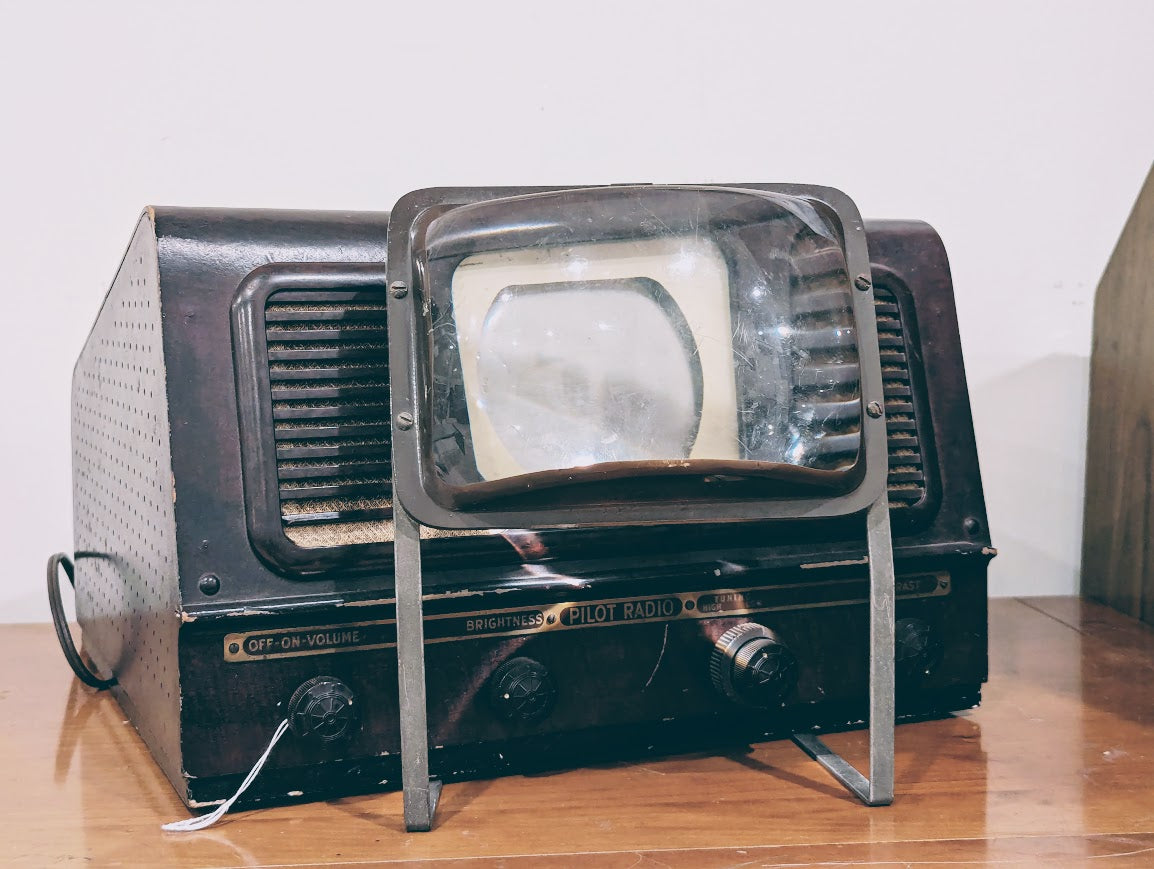
Pilot TV-37
🥇First Television Under $100
Released in 1948, the Pilot TV-37 was a groundbreaking "economy" television that brought the brand-new world of TV to the masses. Dubbed the "Candid" TV, it famously debuted for just $99 (about $1,330 today) at a time when most television sets were luxury items costing three times as much. To hit this low price, Pilot used a tiny, 3-inch screen housed in a simple, suitcase-style cabinet made of Masonite and fake alligator leather. While the screen was so small that viewers often had to buy an optional, liquid-filled magnifying glass just to see it clearly, the TV-37 was remarkably sophisticated for its size, packing a 21-tube circuit that could tune into 13 different channels. Its lightweight design and low price tag made it the world's first "personal" television, marketed to college students and middle-class families as a second set, and its success proved there was a massive consumer appetite for compact, budget-friendly electronics.
Source: Julien's Auctions
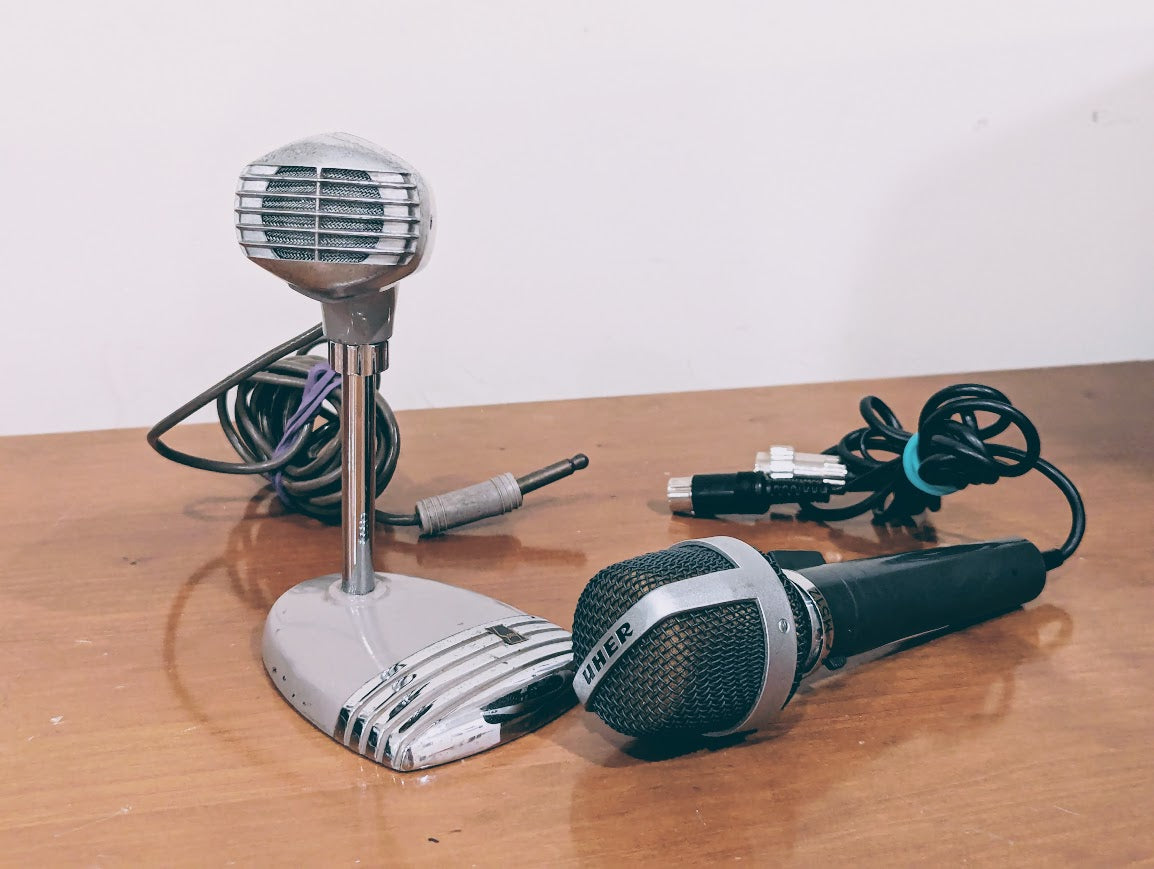
Sony F-3B Microphone
Released in the early 1960s, the Sony F-3B was a rugged and versatile microphone that became a staple for portable reel-to-reel tape recording and public address systems. Encased in a distinctive, hammered-grey metal body with a classic "pill" shape, the F-3B was engineered specifically to match the vacuum-tube tape recorders of the era, like the famous Sony Sterecorder series. It was a straightforward, practical tool featuring a built-in "On/Off" slide switch, a built-in cable, and a desktop tripod stand for sit-down interviews. While it lacked the ultra-wide frequency response of expensive studio microphones, the F-3B was prized for its crisp mid-range clarity and its ability to handle loud sounds without distorting. It served as a reliable workhorse for field reporters and hobbyists alike, who loved it for its mid-century industrial style and its ability to capture clean, clear speech on the go.
Source: Julien's Auctions
Uher M514 Microphones
Released in the mid-1960s, the Uher M514 was a high-quality microphone specifically engineered to pair with the company's legendary "Report" series of portable reel-to-reel tape recorders. Built for Uher by the German acoustics experts at AKG, the M514 featured a sleek, brushed-metal "pencil" body that could be screwed onto a stable tripod or a handheld pistol grip. The microphone was highly regarded for its natural sound quality and its ability to block out background noise, making it an instant favorite for outdoor interviews where wind and ambient crowd chatter could easily ruin a recording. Often bundled in a fitted grey hardshell case with a specialized pin connector, the M514 earned a reputation for its robust "Made in West Germany" construction and its exceptional ability to capture the warm, natural tones characteristic of 1960s analog broadcasting.
Acquired from: Juliens Auctions
Memorial Cartoon Montage
Donation: Justin Tuttle