
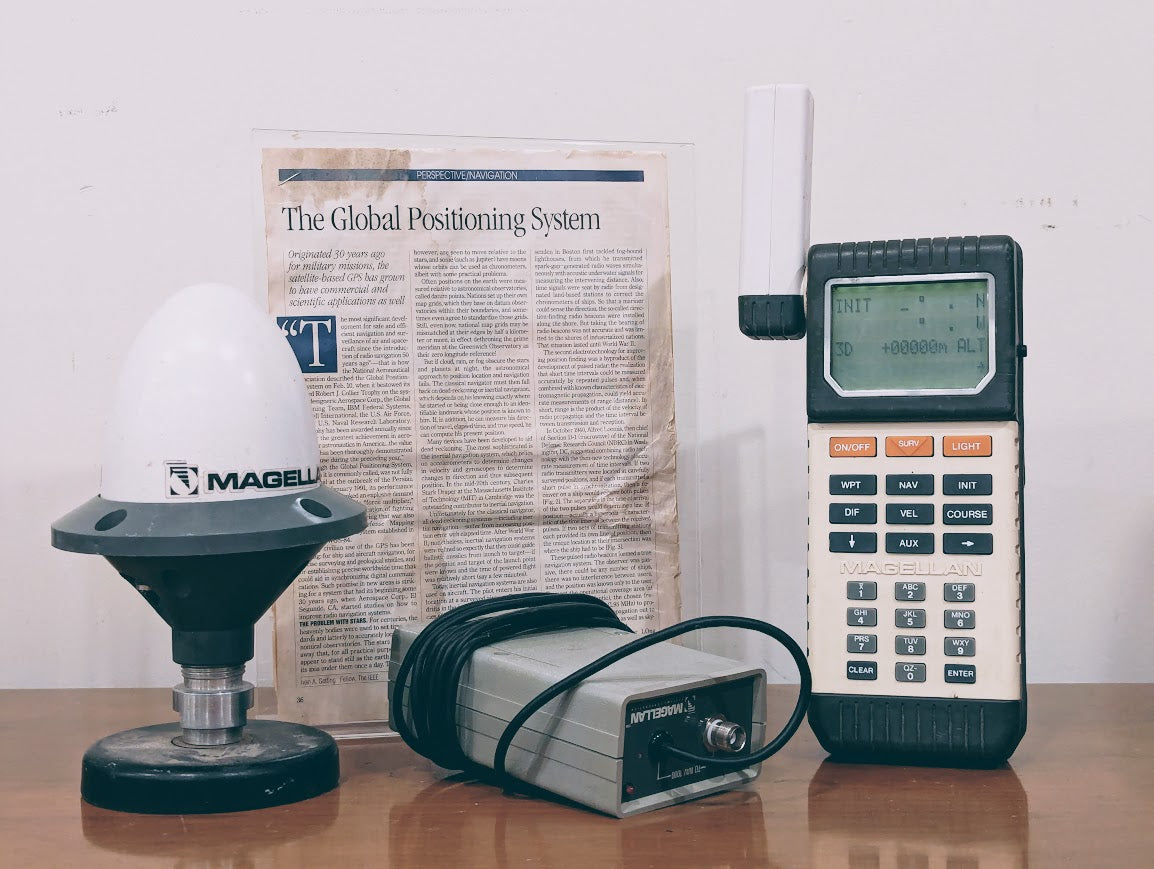


Magellan NAV 1000 Pro GPS System (1990)
Magellan NAV 1000 Pro GPS System (1990)
Magellan
✅ Magellan NAV 1000/1000 Pro
🥇First Comnercially-Released Handheld GPS Receiver (NAV 1000 Series)
The Magellan NAV 1000 Pro, released in 1990 as the professional-grade successor to the world's first commercial handheld GPS, was a ruggedized brick that brought satellite navigation straight to the palms of field surveyors and explorers. Retailing for a premium $1,990, the Pro version improved upon the original 1989 consumer model by offering a more robust data-collection interface and the ability to save up to 200 custom map waypoints. The device was famously chunky—weighing 1.5 pounds and measuring nearly nine inches long—and featured a swiveling antenna that had to be pointed directly toward the sky to lock onto a signal. Because the global GPS satellite system wasn't fully complete in the early 90s, users often had to consult "visibility schedules" to know exactly when enough satellites would be passing overhead to calculate their location. Running on six AA batteries, it provided a simple, two-line text readout that completely revolutionized field research.
Curators Note: This specific unit is a "Museum-Grade" acquisition with a unique provenance. It was originally under consideration for accession by the Smithsonian Institution. Following a rigorous evaluation of the device’s historical integrity and its place within a broader archive of portable systems, the donor ultimately entrusted this artifact to the Westport Tech Museum.
Source: New Mexico, USA Donator

