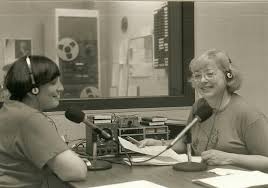
WMNR Fine Arts Radio, Monroe, Connecticut Exhibit (1971-Present)
WMNR Fine Arts Radio, Monroe, Connecticut Exhibit (1971-Present)
WMNR Fine Arts Radio
WMNR Fine Arts Radio History
WMNR Fine Arts Radio was founded in 1971 by my grandparents, John Jr. & Carol Babina. That year, the Monor Connecticut Board of Education agreed to hold the FCC license for WMNR and provided the facilities for the station at Masuk High School. The equipment for the station was paid for with donations from individuals and businesses in Monroe, and the station quickly turned into a community project. The station began broadcasting after receiving their FCC license in November 1973.
My grandmother, Carol Ann Babina (1945-2025), was the voice of WMNR. Over 50 years of service to the station, she raised over $19 million for the station during routine pledge weeks using just the power of her voice. My grandfather, Johh Babina Jr., was the technical mastermind who built most of the station's early equipment himself. He repurposed equipment that was donated to serve the purpose of broadcasting for WMNR. In 2024, Carol and John Jr. were inducted into the Connecticut Broadcasting Hall of Fame for their impact on the Connecticut radio scene.
Today, over 50 years later, WMNR is still on the air and reaches listeners all over the world. For lower Fairfield County, their frequency is 88.1 FM.
WMNR Broadcasting Equipment
The following equipment was equipment that was used for broadcast at WMNR in their early days:
Western Electric 22D Speech Input Equipment Remote Amplifier Unit (1940)
The Western Electric 22D Speech Input Equipment, introduced in 1940, was a high-fidelity portable amplifier designed to bring studio-grade radio broadcasting capabilities directly into the field. Built for the rigorous demands of on-the-spot news reporting, the system was divided into two compact, 30-pound luggage-style cases—one for the audio mixer and amplifier, and another for the heavy power supply—making it perfectly balanced for a single technician to carry to a remote site. It featured incredible signal boosting power and a remarkably flat, accurate audio response, ensuring that remote broadcasts maintained the exact same sonic clarity as a permanent radio station. The 22D was exceptionally versatile, capable of running on standard wall outlets or batteries with a seamless "instant change" switch to prevent dead air if the main power suddenly failed.
Marantz PMD 200 Professional Cassette Recorder
The Marantz PMD 200, released in the early 1980s, was a specialized portable recording workhorse that became a standard tool for field reporters, educators, and legal professionals who required broadcast-quality audio on the move. Unlike standard, consumer-grade tape decks, the PMD 200 was built with a rugged, professional body and featured a unique two-speed recording system, allowing users to cut the tape speed in half to double the recording time on a single cassette—perfect for long-form lectures or courtroom depositions. It came equipped with a high-quality built-in microphone, a dedicated professional microphone input jack, and automatic level controls that prevented audio distortion in unpredictable, noisy environments. Powered by three large D-cell batteries, the unit also featured an analog volume meter and a pitch control dial, ensuring field recordings maintained a level of crisp fidelity that was ready for the radio waves.
Donated by: John Jr. & Carol Babina