Typewriters (1912-1938)
Typewriters (1912-1938)
MISC
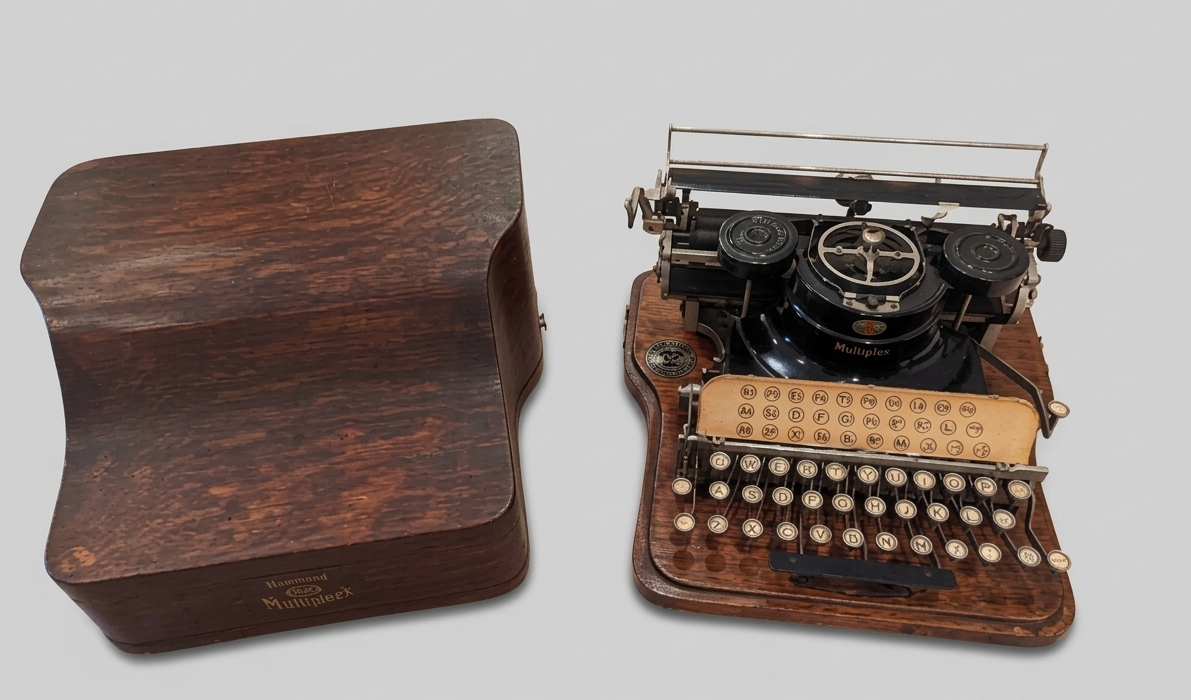
Hammond Multiplex
The Hammond Multiplex, introduced in 1913, was a radical departure from standard typewriters like a Remington or Underwood. Instead of having long metal arms for each letter that slammed into the paper, it used a single, curved typing wheel that zipped into position before a small internal hammer struck from behind, pressing the paper against the ink ribbon.This clever design gave the "Multiplex" its standout feature: the ability to hold two different font wheels at the exact same time. A writer could swap from italics to regular print, or English to Greek, in just a few seconds by simply twisting the dial on top. This made it the absolute favorite tool for scientists, language experts, and famous authors who needed special symbols or multiple languages in a single document.
Source: Elephant's Trunk Flea Market
Corona Model 3 Portable Typewriter
The Corona Model 3, introduced in 1912, is perhaps the most famous folding typewriter in history and a true masterpiece of portable engineering. Built specifically for traveling journalists and military officers on the move, the Model 3 featured a collapsible design that allowed the entire top half of the machine to fold completely forward over the keyboard. This cut its height in half, allowing it to slide into a tiny, leather briefcase.Despite weighing only six pounds, it was a fully functional, rugged machine. It gained legendary status during World War I, where its tough aluminum frame made it the standard field typewriter for Allied troops on the front lines, and it later became the favorite writing tool of author Ernest Hemingway. In many ways, it was the direct ancestor of the modern laptop computer.
Donation: Alan & Jeanie Sacks
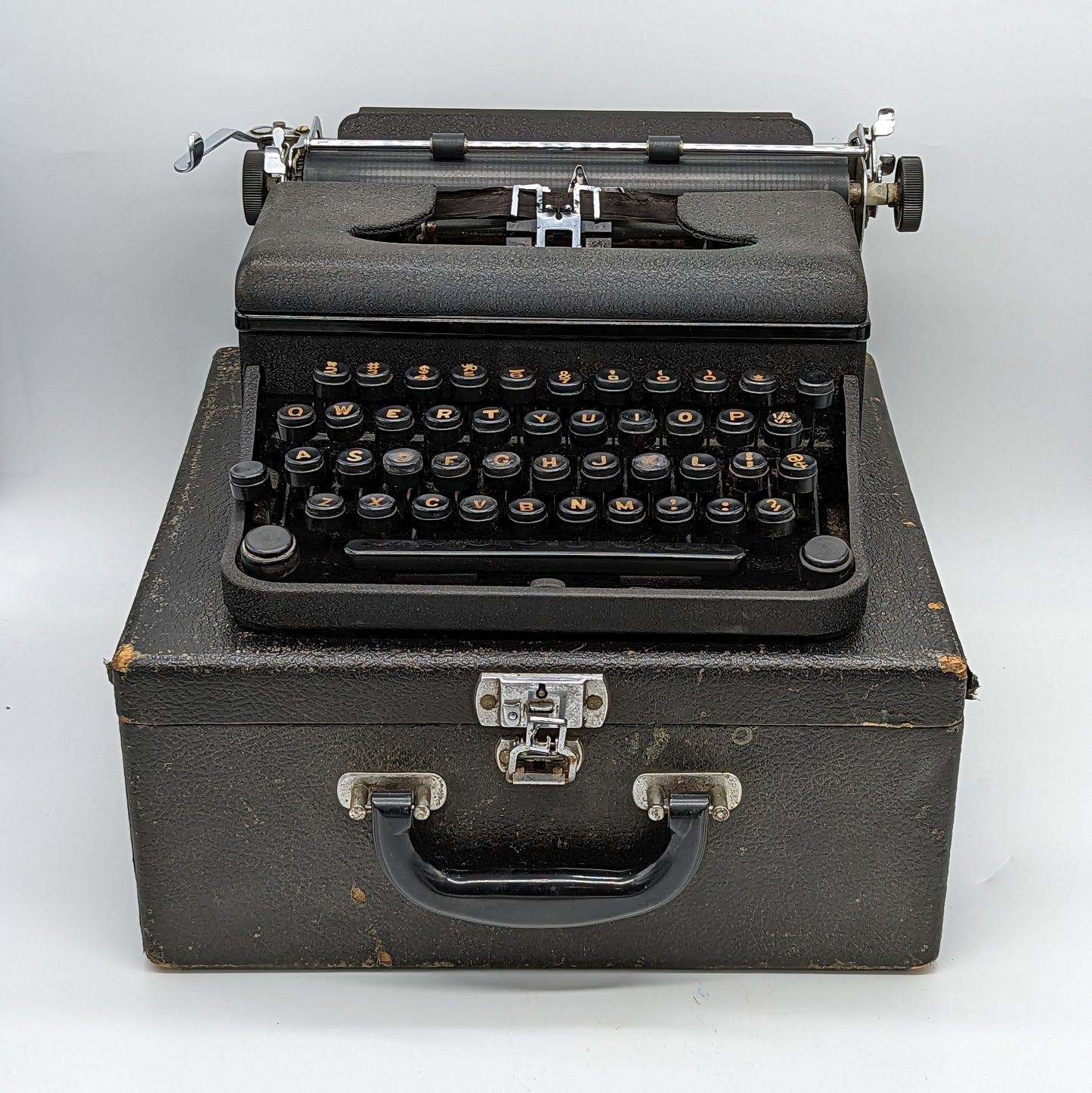
Royal Varsity
The Royal Varsity, introduced in 1935 during the height of the Great Depression, was a budget-friendly, stripped-down typewriter specifically marketed to students for about $37.50. To make the machine affordable for struggling households, Royal removed several luxury features found on their more expensive models. Most notably, the Varsity completely lacked a backspace key, a margin release button, and a two-color ribbon selector—meaning you could only type in black ink. Despite being a "no-frills" machine, it kept the rugged, all-metal construction that made Royal typewriters famous for durability. It was finished in a textured black paint that easily resisted scratches and fingerprints, making it incredibly reliable and easy to maintain in college dorm rooms across America.
Source: Estate Sale, Westport CT