Eveready Batteries (c.1924-1960)
Eveready Batteries (c.1924-1960)
Eveready
Eveready "C" Cell Battery
By 1924, what we now call a "C cell" battery was known as the No. 935 Unit Cell, and it played a massive role in the early days of portable electronics and home radios. Unlike the giant, heavy batteries used for old wall telephones, the C cell offered a compact, cylindrical 1.5-volt option. It was perfect for the specialized circuits inside 1920s radios, where it provided the exact electrical balance needed to ensure the music sounded clear and undisplaced. These early batteries were wrapped in simple cardboard jackets and featured an old-school design with a brass plug on top and a zinc metal base. While they were increasingly sold to power the era's new handheld flashlights, their most prestigious job was keeping household tabletop radios running, helping transition electricity from a stationary wall utility into a truly portable consumer convenience.
Source: Monger's Market
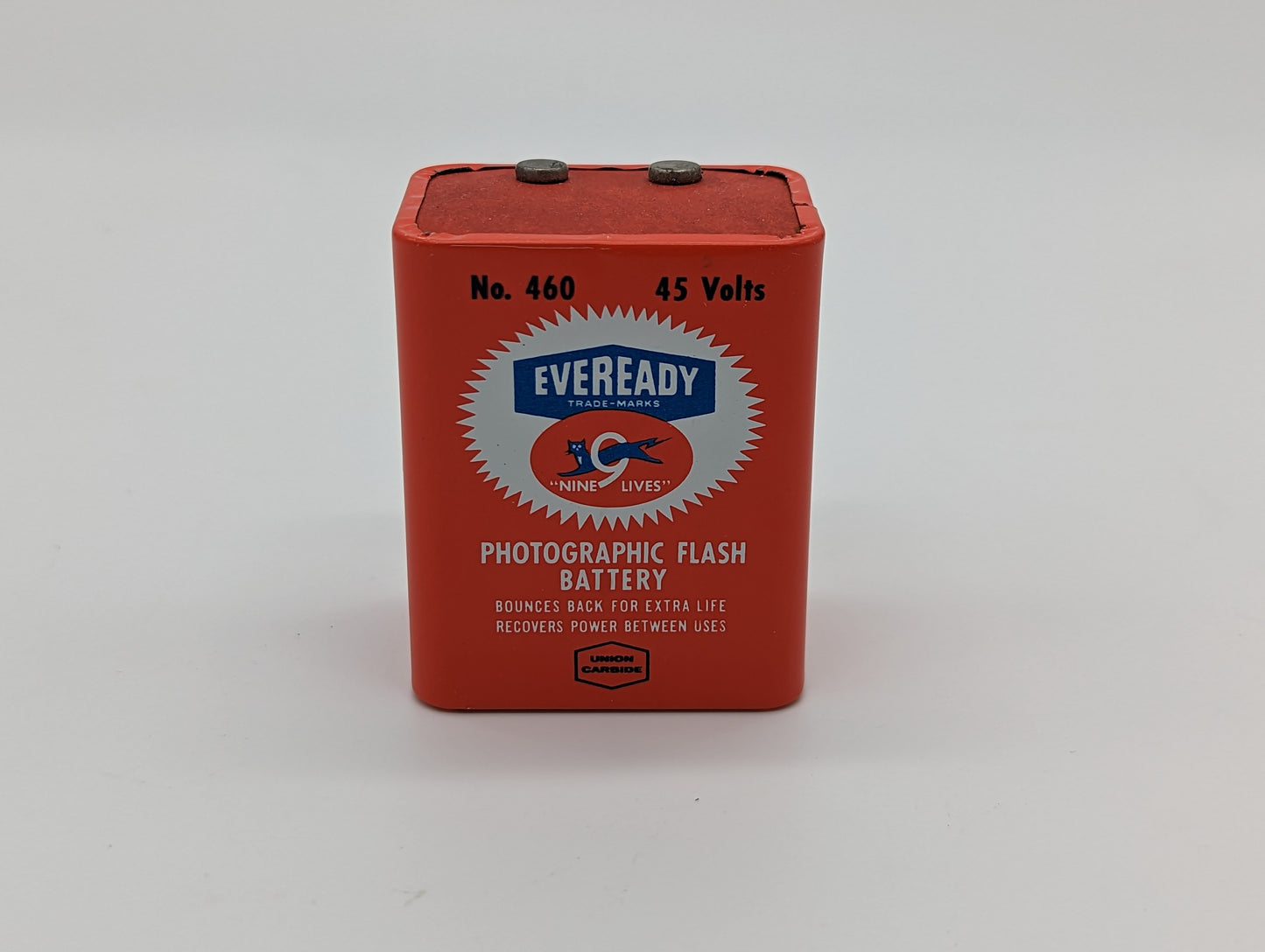
"9 Lives" Eveready Battery
The Eveready "9 Lives" branding, featuring the famous image of a black cat leaping through a stylized number nine, is one of the most recognized symbols in the history of American tech packaging. Originally introduced in the early 1900s and popularized during the portable radio boom of the mid-century, the cat mascot was a clever marketing metaphor for the battery’s durability. The idea was that, just like a cat with nine lives, the battery could "bounce back" and recover after heavy use to provide extra bursts of energy. These batteries were famously encased in vibrant red, white, and blue tin jackets, protecting the power cells inside that kept everything from Boy Scout flashlights to portable pocket radios working. The leaping cat remains a beloved piece of pop-culture nostalgia, synonymous with the golden age of handheld gadgets.
Source: Found in vintage Walkie-Talkies - Elephant's Trunk Flea Market