Unless otherwise noted, videos are courtesy of YouTube.
* If you receive an error when viewing a video, please reload page. (known error with Shopify)
Nintendo Family Computer (Famicom) & Famicom Disk System (1983-2003)
Nintendo Family Computer (Famicom) & Famicom Disk System (1983-2003)
Nintendo
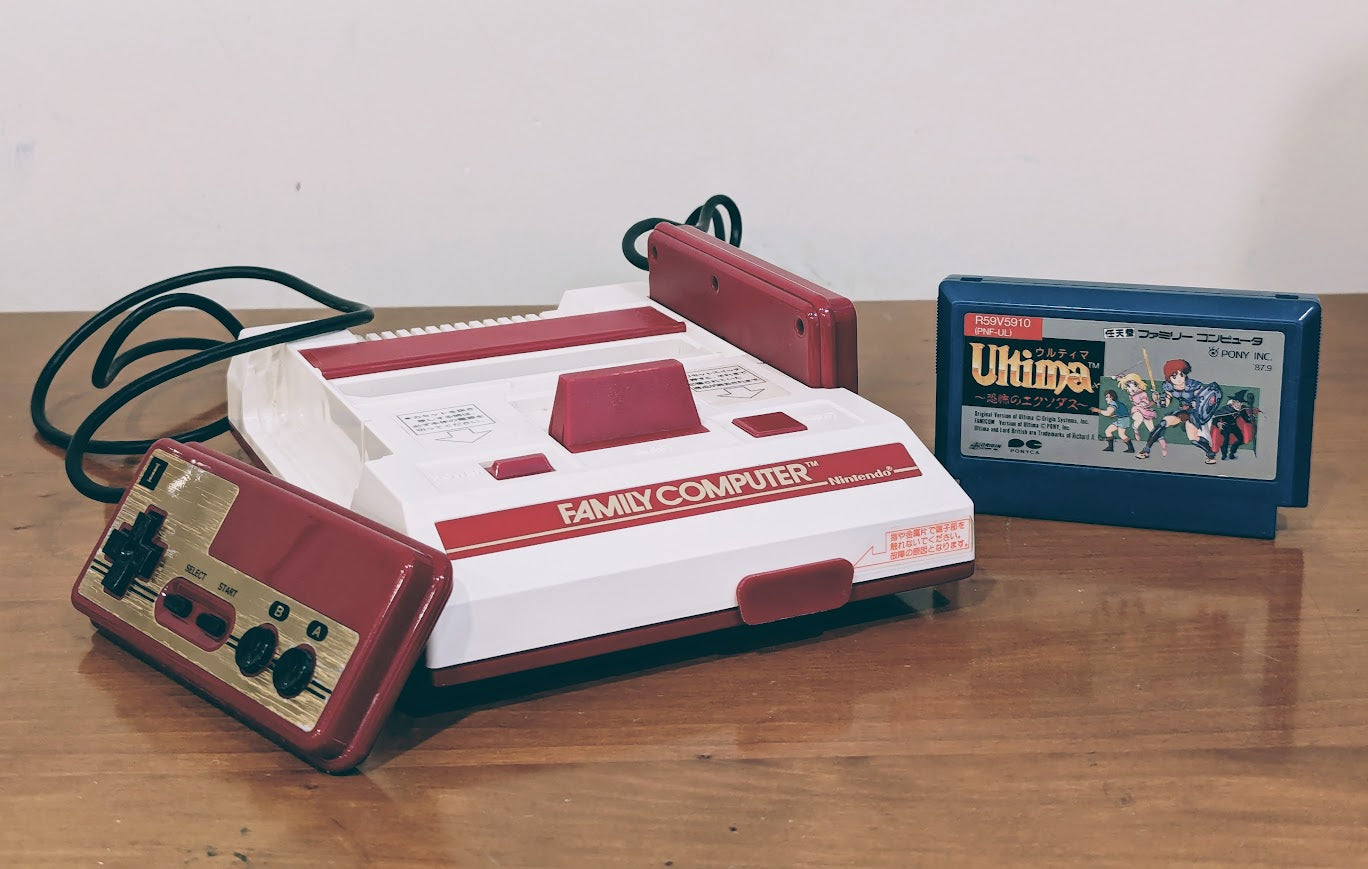
✅ Nintendo Family Computer
Released in Japan on July 15, 1983, the Nintendo Family Computer, or Famicom, was the 8-bit powerhouse that revolutionized the video game industry and served as the direct blueprint for the Western NES. Dressed in a striking crimson and white plastic shell with two hard-wired controllers—the second of which featured a built-in microphone for voice-activated secrets—the Famicom delivered arcade-quality graphics that far surpassed its contemporary home rivals. Its top-loading cartridge slot became the gateway to a massive library of genre-defining titles like Super Mario Bros. and Metroid, which used custom internal chips inside the game cartridges to expand the console's memory and visual capabilities. By the time it was discontinued in 2003, the Famicom had sold nearly 20 million units in Japan alone, cementing Nintendo’s transition from a humble playing-card company into a global titan of digital entertainment.
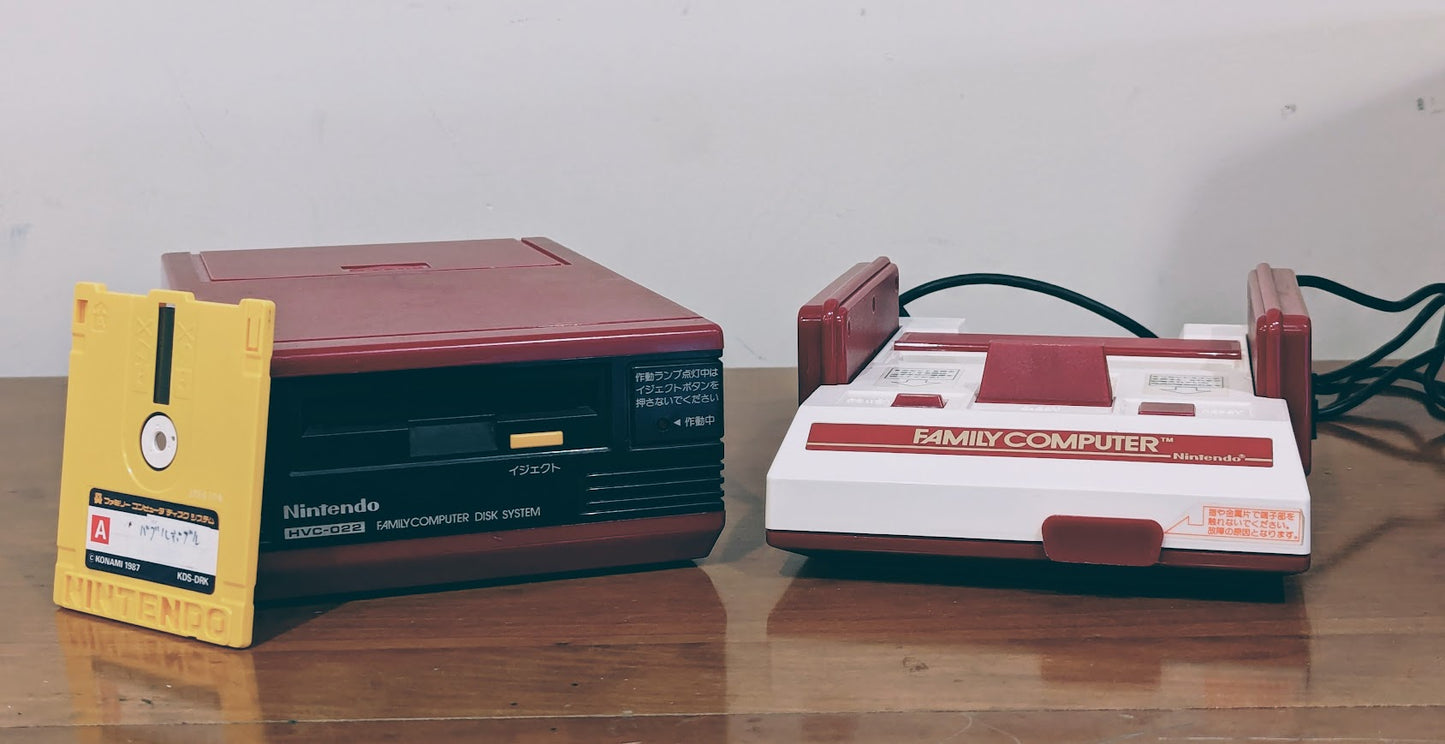
✅ Nintendo Famicom Disk System
The Famicom Disk System (FDS), launched in 1986 as a proprietary add-on that sat directly beneath the main console, was a visionary attempt to solve the high cost and limited storage of early 1980s game cartridges. By utilizing proprietary 2.8-inch double-sided floppy disks, the system provided rewritable storage that allowed for the first-ever "save game" features in massive adventures like The Legend of Zelda. A unique "Disk Writer" kiosk system was set up in Japanese toy stores, letting players bring in an old disk and have a completely new game copied onto it for a fraction of the cost of a new retail cartridge. Despite featuring an enhanced audio chip that provided deeper bass and richer melodies than the standard console, the Disk System was eventually held back by the mechanical fragility of its internal rubber drive belts and the rapid advancement of cartridge technology, which eventually outpaced the disk's storage capacity.
See Also: Nintendo Entertainment System (1985)
Sourced from: eBay.com