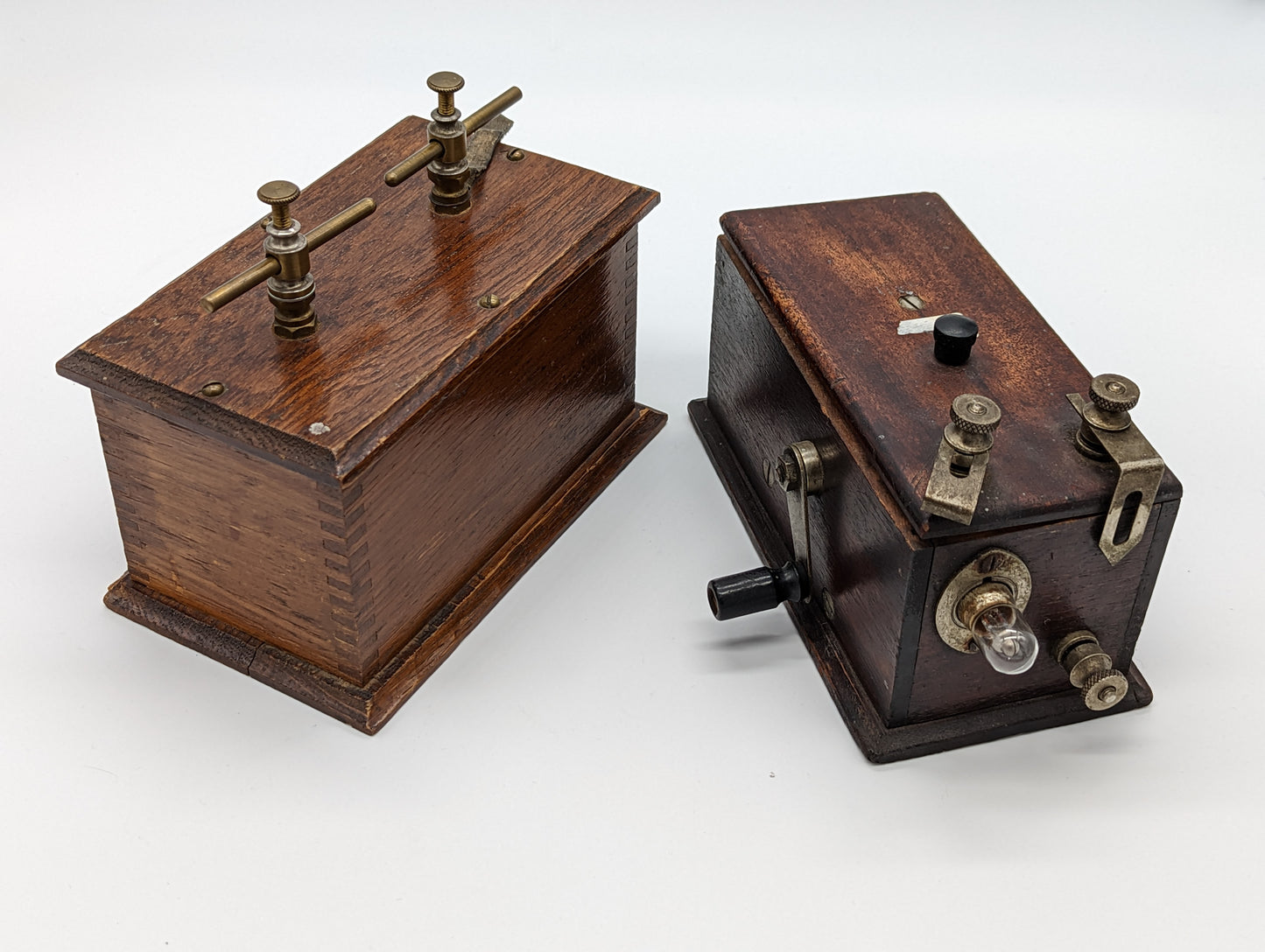
Commercial Grade Spark Gap Transmitter & Telephone Magneto Test Unit(c. 1900)
Commercial Grade Spark Gap Transmitter & Telephone Magneto Test Unit(c. 1900)
Unknown
Commercial-Grade Spark Gap Transmitter
The Commercial-Grade Spark Gap Transmitter, which ruled the early days of radio from 1896 to 1920, was the powerhouse behind the world's very first global wireless networks. Unlike tiny amateur gadgets, these massive installations—including the shipboard radio room on the RMS Titanic—used giant banks of electrical storage jars and high-voltage generators to blast intense radio waves across thousands of miles of ocean. The heart of the system was a motor-driven spinning disk that timed the electrical blasts, creating a distinct, musical "singing spark" that operators could easily hear over background static. While incredibly tough and reliable, these transmitters were notoriously messy. They blasted their signal across a massive, wide wave spectrum, effectively drowning out any other nearby radio traffic. Because they caused such severe radio interference, international regulators officially banned the technology in the early 1930s, saving it strictly for emergency shipboard use.
Donation: John & Carol Babina Jr.
Telephone Magneto Test Unit
The Telephone Magneto Test Unit was a rugged, hand-cranked tool used by telephone repair crews throughout the early 20th century to fix rural phone lines. Instead of relying on batteries, this portable tester featured an internal generator made of spinning magnets. When a technician, known as a "lineman," cranked the handle, the unit generated a powerful jolt of electricity (around 70 to 90 volts)—enough to ring a mechanical telephone bell miles away or light up a signal at a central operator's switchboard. Repairmen could actually diagnose line problems just by the physical resistance they felt in the crank handle: if the handle spun completely free and easy, it meant a wire was snapped somewhere down the line; if it was heavy and incredibly difficult to turn, it signaled a short circuit where two wires were touching.
Donation: John & Carol Babina Jr.