Telegraph (1860-1930)
Telegraph (1860-1930)
Unknown
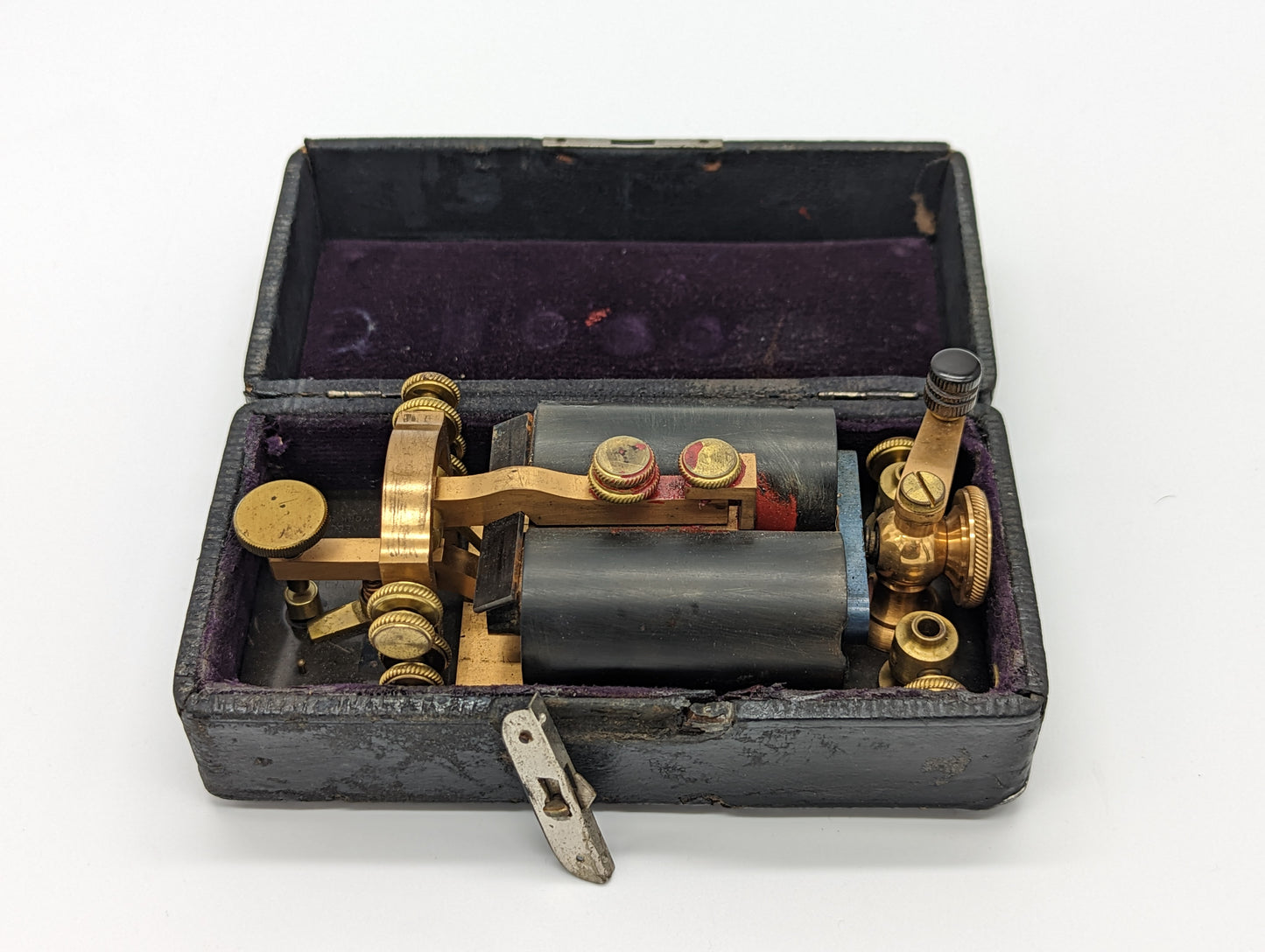
Caton Linesman Telegraph Set (c. 1860's)
The Caton Linesman Telegraph Key was a masterpiece of 19th-century miniaturization, developed in the early 1850s as a pocket-sized alternative to standard communication equipment. Unlike the bulky, heavy telegraph stations found permanently bolted down in railroad depots, the Caton was a self-contained, ultra-portable system measuring roughly 5 by 2 inches, neatly protected inside a durable hard-rubber or wooden case. It packed a miniature tapping key and compact internal sound components, allowing traveling technicians to clip directly into outdoor iron telegraph lines right in the middle of a field. During the American Civil War, these pocket units became legendary as a preferred tool for both Union and Confederate spies. Scouts could stealthily climb telegraph poles, hook up the device, and easily intercept enemy battlefield messages or send out false coordinates to confuse the opposing army, cementing this tiny gadget as a crucial artifact in the history of military intelligence.
Donation: John & Carol Babina Jr.
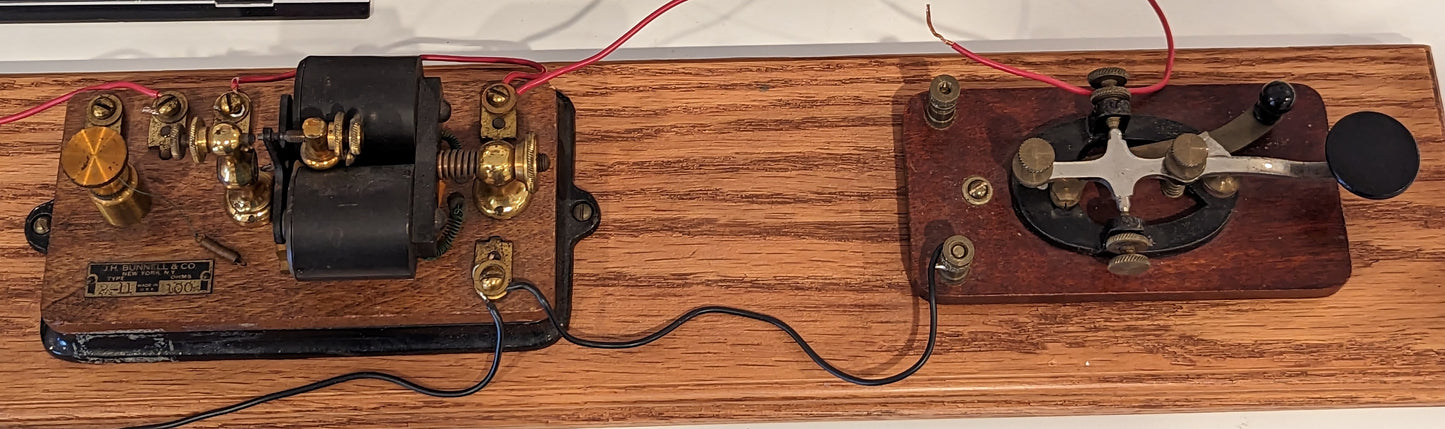
Homemade Telegraph Set
My grandpa created this WORKING Telegraph set with real old pieces of technology. When pressed, the telegraph makes a clicking noise; just like if you were using Morse Code in the 1800's!
Donation: John & Carol Babina Jr.
Fun Fact: Wireless telegraphs were used to communicate back to shore when the Titanic hit the ice berg.